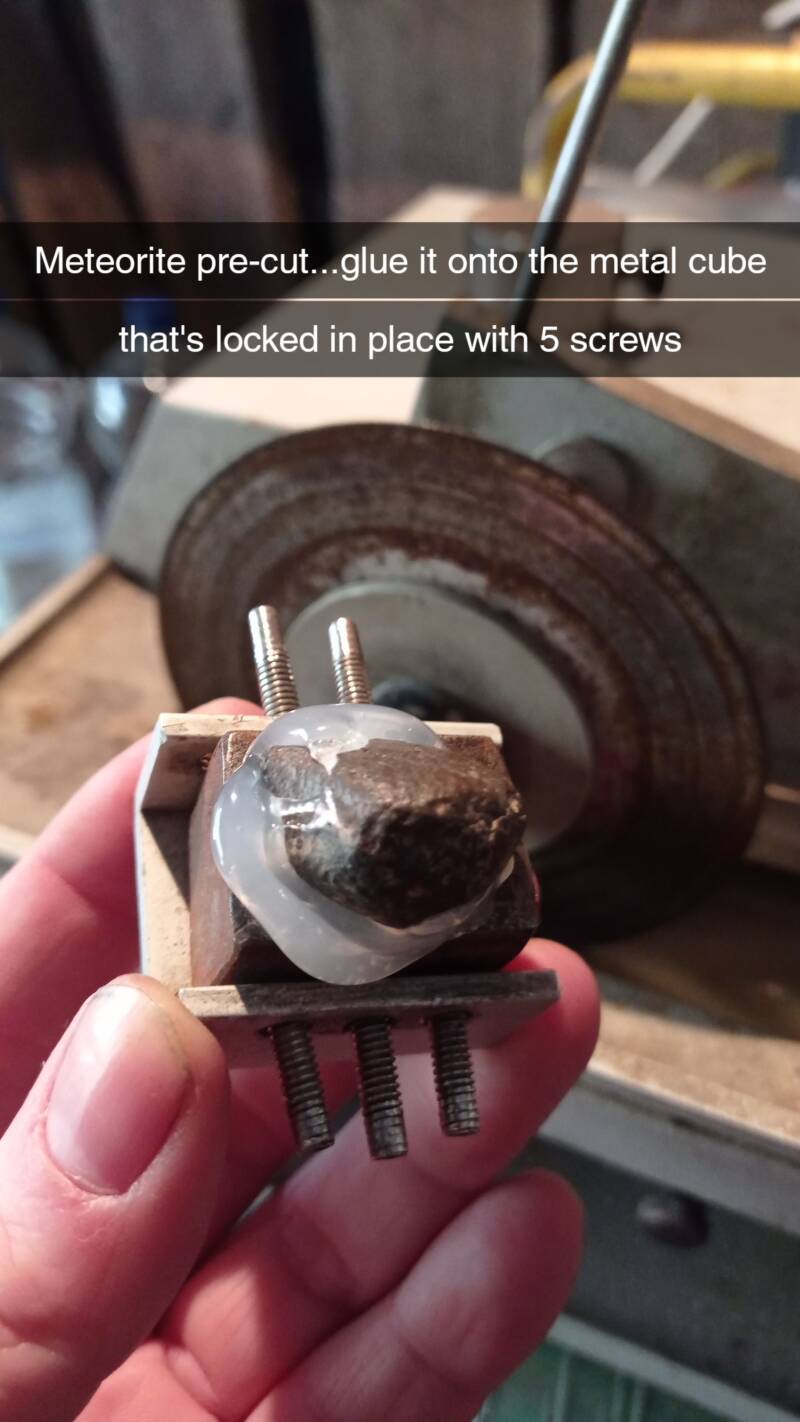
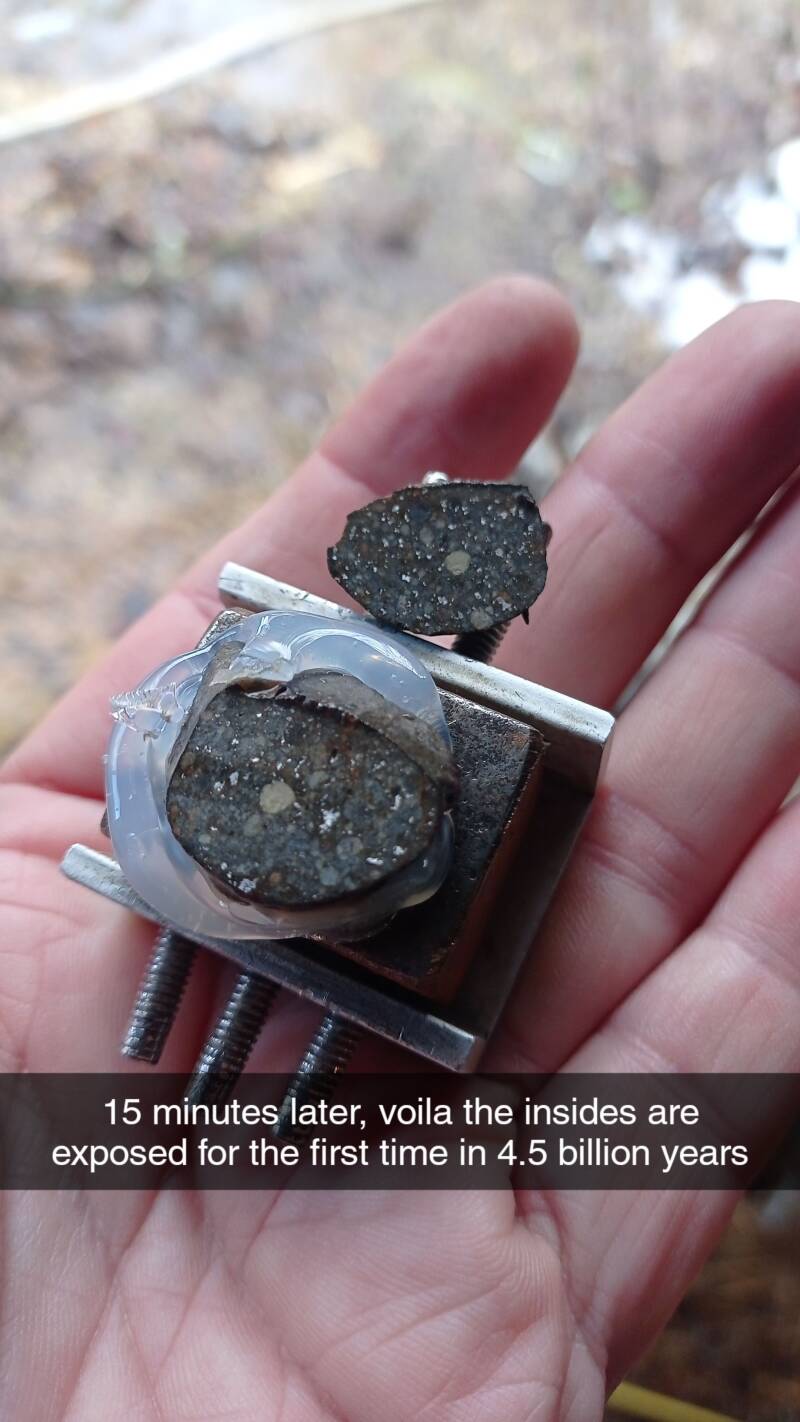
Our meticulous meteorite polishing process
Discover the craftsmanship behind every polished meteorite at NWA 869. We transform desert found individual stones and fragments into stunning, enduring treasures through a careful and dedicated process, ensuring each piece reveals its unique story.
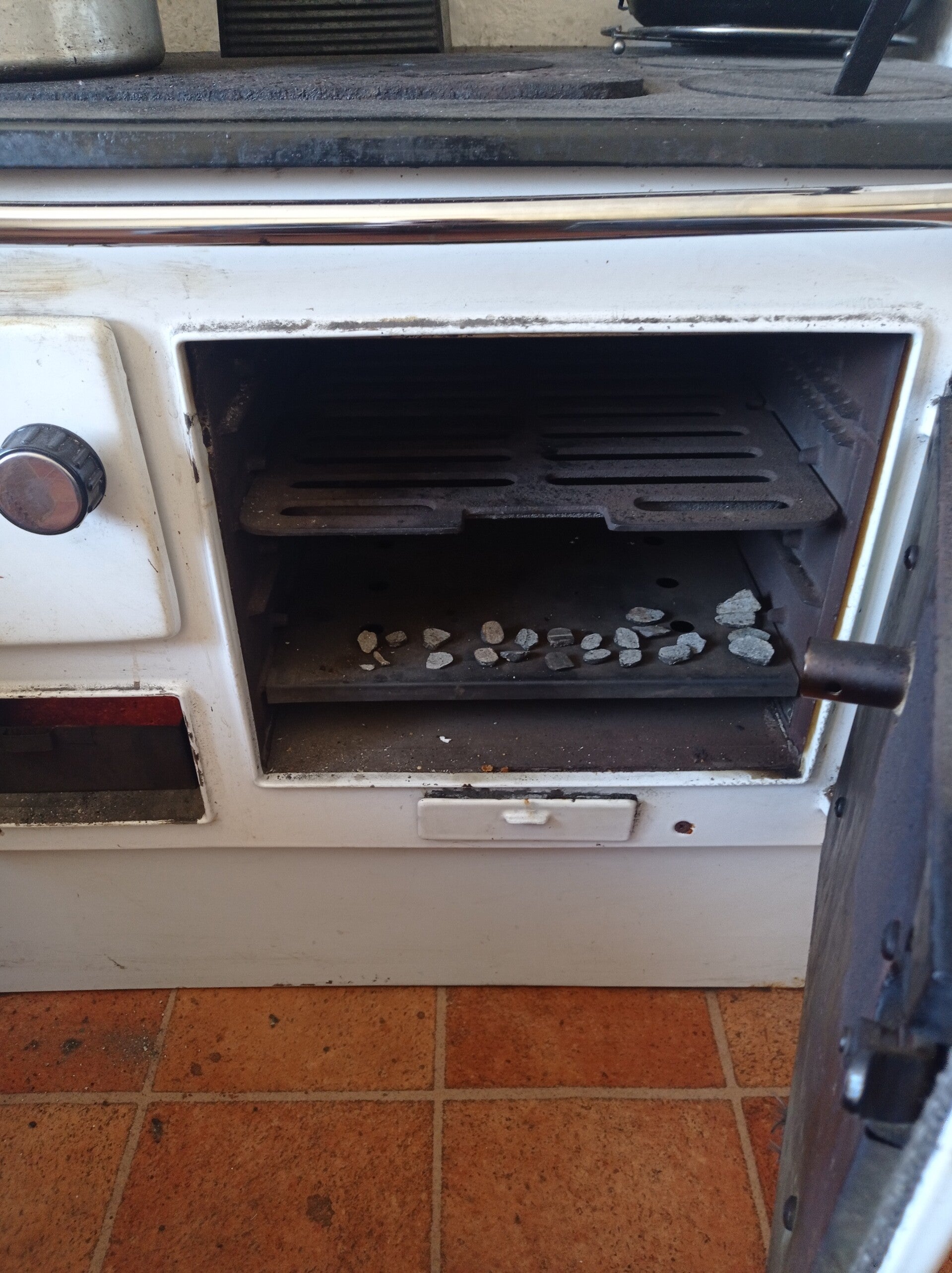
Drying and preparation
After being carefully split, each meteorite half undergoes a crucial drying period. This step, which can take hours or even days depending on the time of year in Donegal, ensures the meteorite is completely dry after its bath in ionised water from the cutting procedure. This meticulous preparation is essential before we begin the polishing work, setting the stage for a flawless finish.
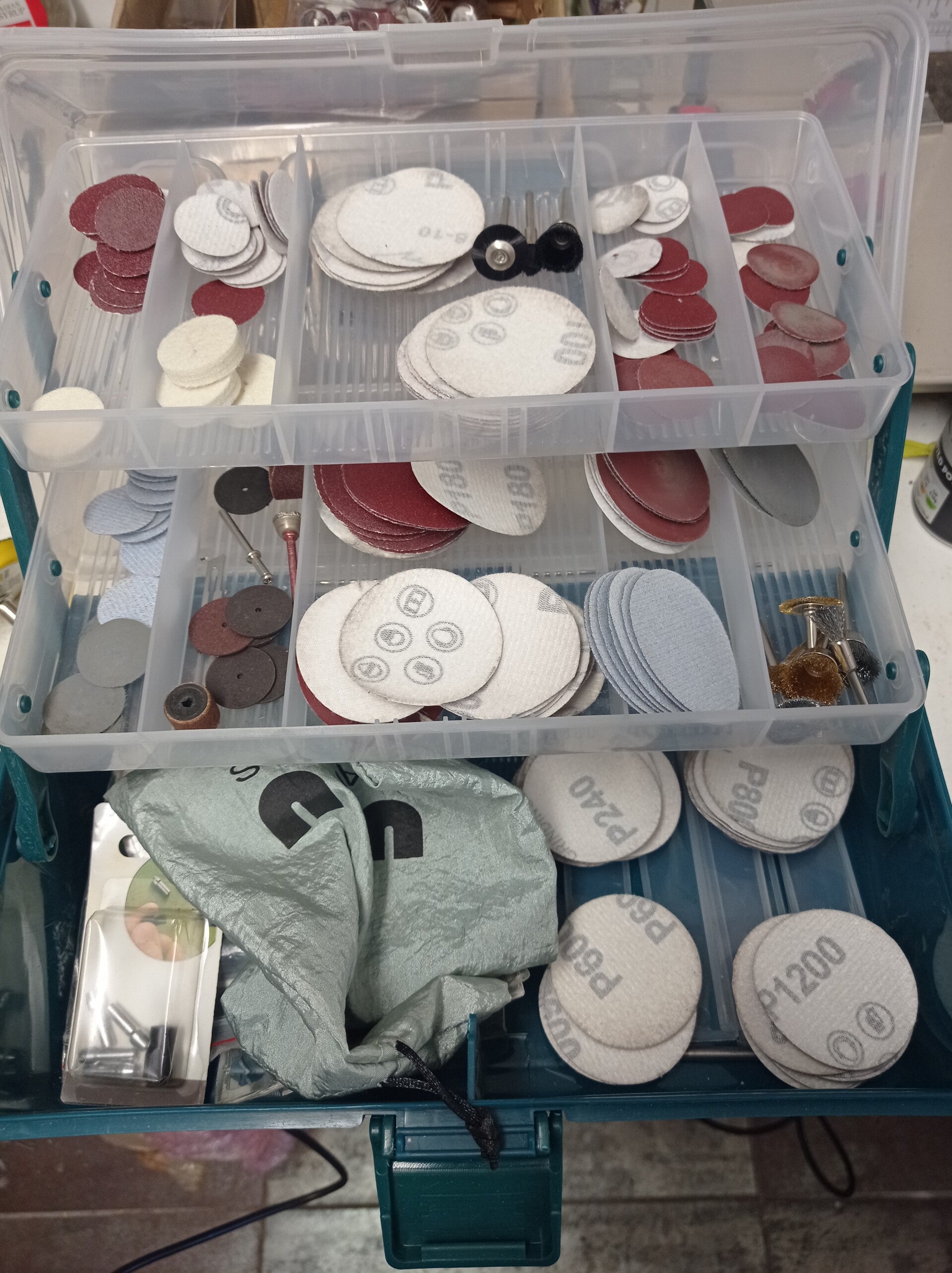
The journey to a mirror finish
Once dried, the polishing journey begins. We use a rotary tool and systematically work through approximately 12 grades of sandpaper, starting with a low grit and gradually progressing to finer textures. This time-consuming yet rewarding process is what allows us to achieve the signature mirror-like finish that accentuates the meteorite's natural beauty and internal structure.
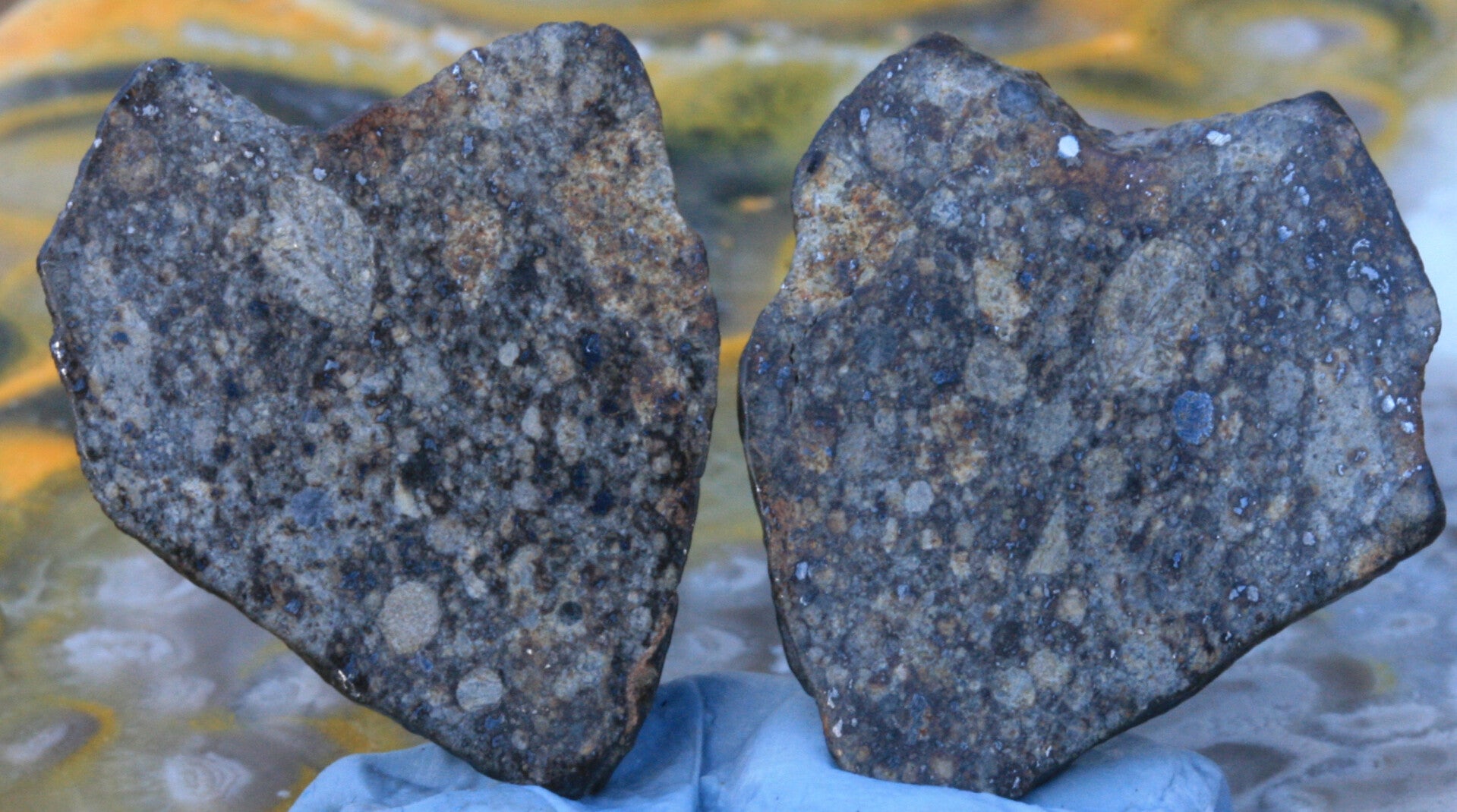
The significance of polishing
Polishing serves two vital purposes for our meteorites. Firstly, it accentuates the internal structure, bringing the various clasts, chondrules, and matrix particularities into clearer focus for you to admire. Secondly, the polishing process imparts a crucial level of stabilisation, helping the meteorite stay rust-free and preserved for generations to come. It’s a process that reveals beauty and ensures longevity.
See the process in action
We'll soon be adding videos and photos to this page to visually demonstrate the various aspects of our cutting and polishing process. Stay tuned to see the meticulous care and craftsmanship that goes into each NWA 869 meteorite.